- Published on
GoldenSpray Lab Walkthrough

- Lab Scenario
- CTF Walkthrough
- Q1 What's the attacker IP?
- Q2 What country is the attack originating from?
- Q3 What's the compromised account username used for initial access?
- Q4 What's the name of the malicious file utilized by the attacker for persistence on ST-WIN02?
- Q5 What's the full path used by the attacker for storing his tools?
- Q6 What's the process ID of the tool responsible for dumping credentials on ST-WIN02?
- Q7 What's the second account username the attacker compromised and used for lateral movement?
- Q8 Can you provide the scheduled task created by the attacker for persistence on the domain controller?
- Q9 What's the encryption type used in the environment Kerberos tickets?
- Q10 Can you provide the full path of the output file in preparation for data exfiltration?
Lab Scenario
As a cybersecurity analyst at SecureTech Industries, you've been alerted to unusual login attempts and unauthorized access within the company's network. Initial indicators suggest a potential brute-force attack on user accounts. Your mission is to analyze the provided log data to trace the attack's progression, determine the scope of the breach, and attacker's TTPs.
CTF Walkthrough
Here's a link to CyberDefenders GoldenSpray Lab
Q1 What's the attacker IP?
index=goldenspray AND event.action=logon AND event.outcome=failure
| top limit=20 "winlog.event_data.IpAddress"
- With the most failed login attempts we can clearly see that
77.91.X.Xis a public IP address. More than 16 failed login attempts were from this IP address alone. Remember the type of the IP address used in this case, let's dive a bit deeper and check the timing for each failed login.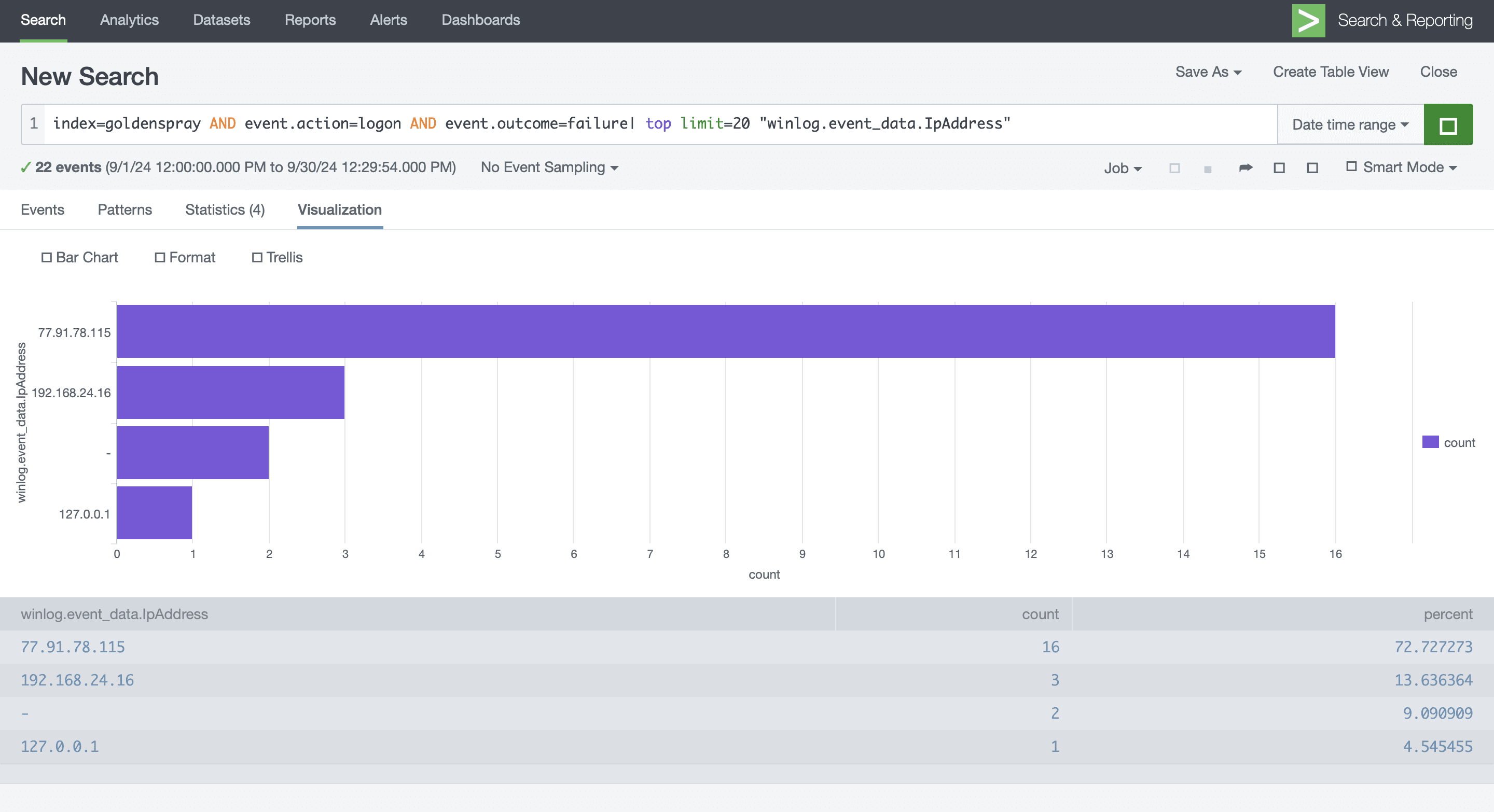
index=goldenspray AND event.action=logon AND event.outcome=failure "winlog.event_data.IpAddress"="77.91.78.115"
| table _time, event.outcome, winlog.event_data.IPAddress
- We know that
192.168.X.Xis a Class C Private IP address and127.0.0.1is a loopback address. Both of them are being used by the server and are publicly non routable. Coming to the public IP address77.91.78.115we can clearly see that each failed login attempt was within a 30 minute timeframe. This is a clear sign of brute force attack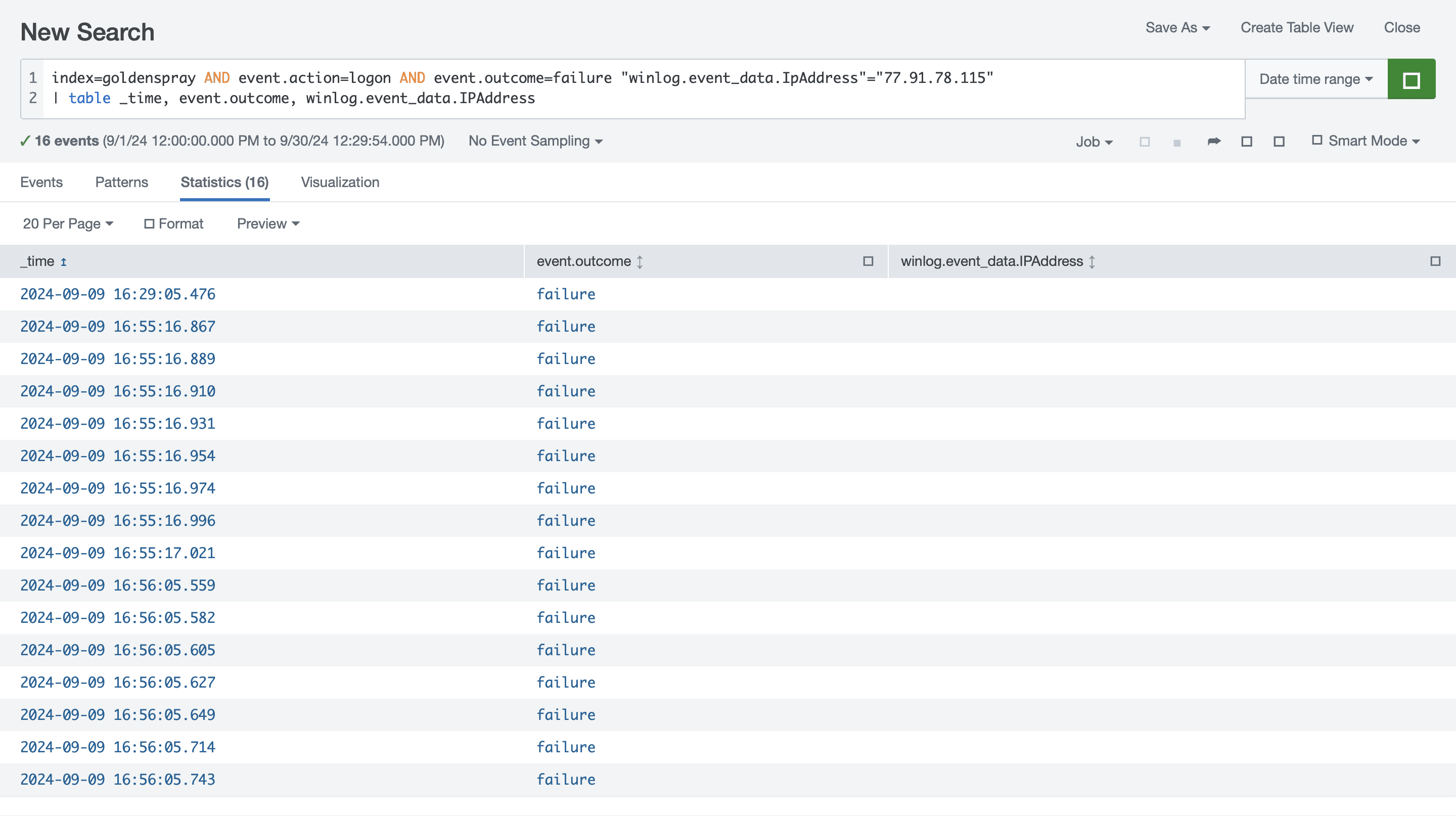
Q2 What country is the attack originating from?
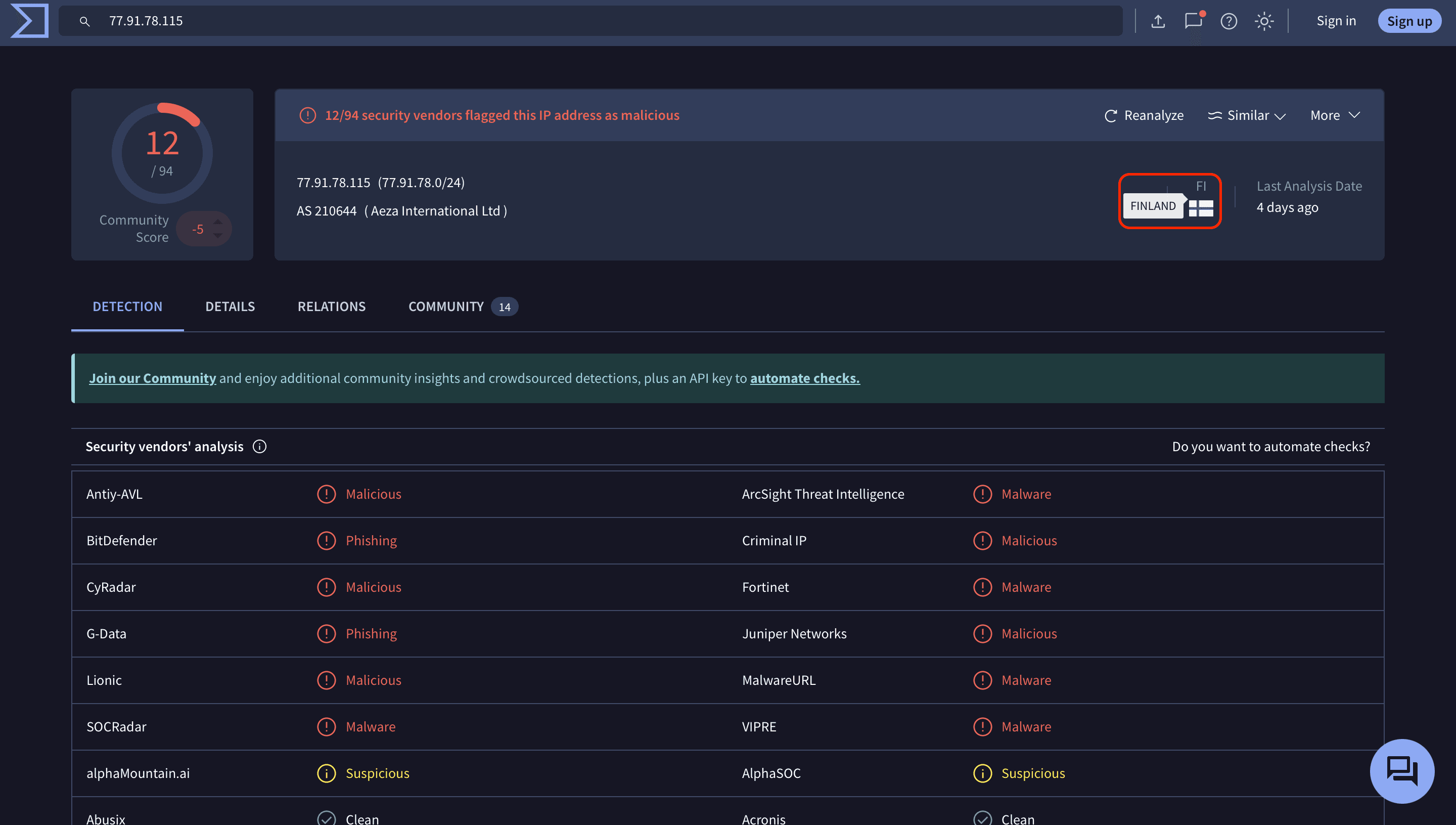
- You can make use of VirusTotal to find out the Country from which this IP address originated from. Hover over the flag and you'll get your answer
Q3 What's the compromised account username used for initial access?
index=goldenspray AND winlog.event_data.IpAddress="77.91.78.115" AND "event.action"=Logon
| table _time, event.outcome, winlog.event_data.TargetUserName
- After using the query mentioned above we see
mwilliamsaccount with 4 successful logons after many failed login attempts. ClickView eventsfor more detailed analysis of this event. Underwinlogyou'll find account username used for initial accessSECURETECH\mwilliams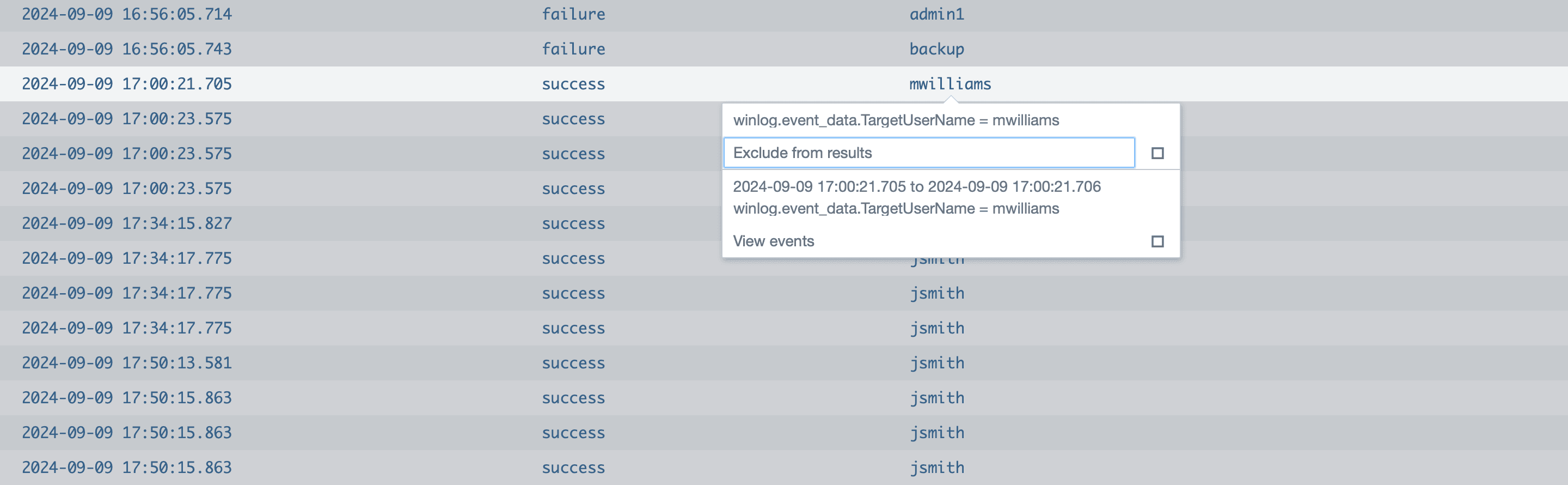
Q4 What's the name of the malicious file utilized by the attacker for persistence on ST-WIN02?
index=goldenspray AND sourcetype="ST-WIN02" "event.code"=11 "winlog.event_data.User"="SECURETECH\\mwilliams"
| table _time, winlog.event_data.TargetFilename
| sort by _time
- Here the first executable file which is
OfficeUpdater.exewas targeted by the attacker for persistence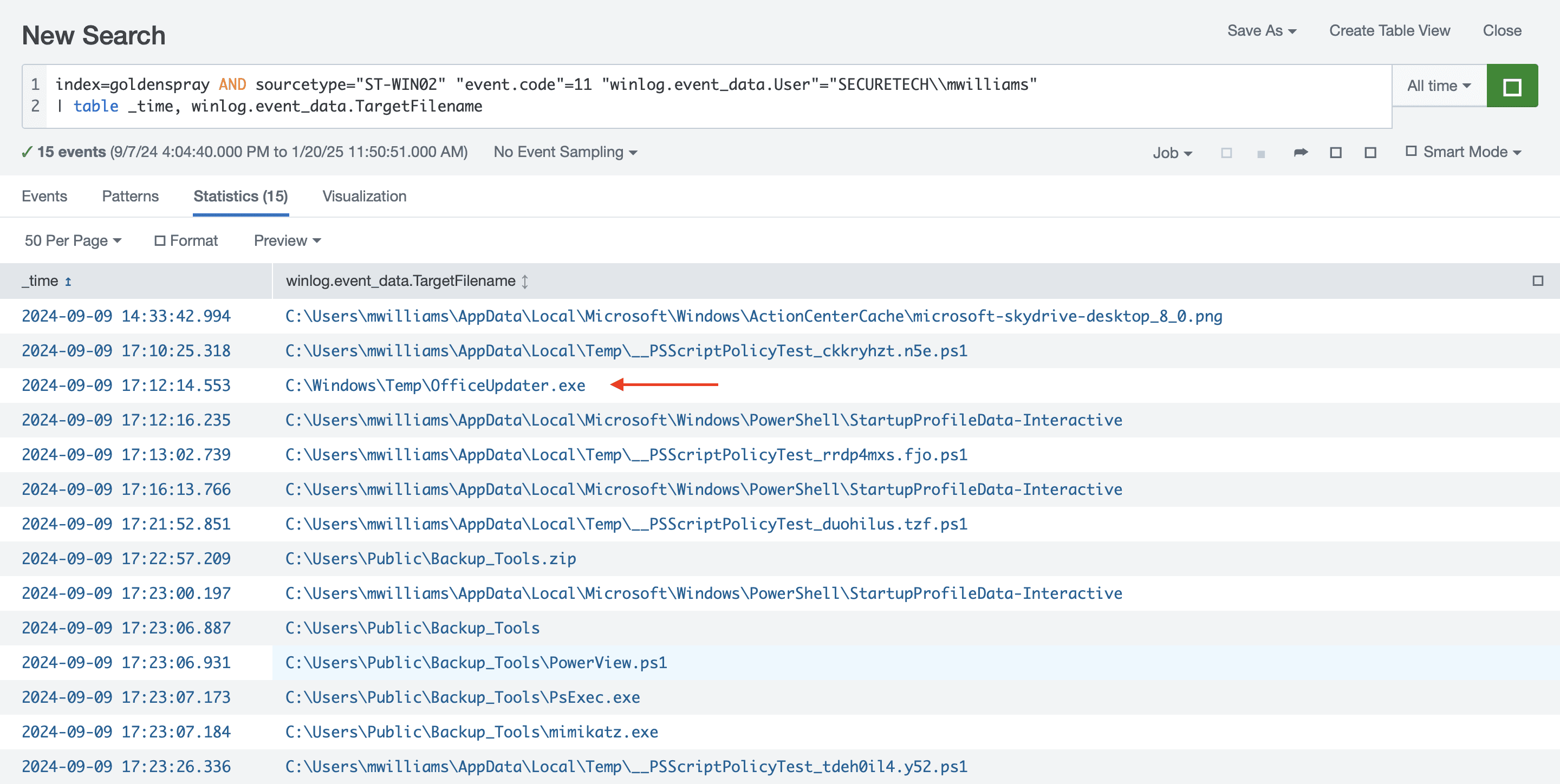
Q5 What's the full path used by the attacker for storing his tools?
- Using the query from question number 4 we can find out the directory used by the attacker for storing power shell scripts and tools like
mimikatzfor malicious purposes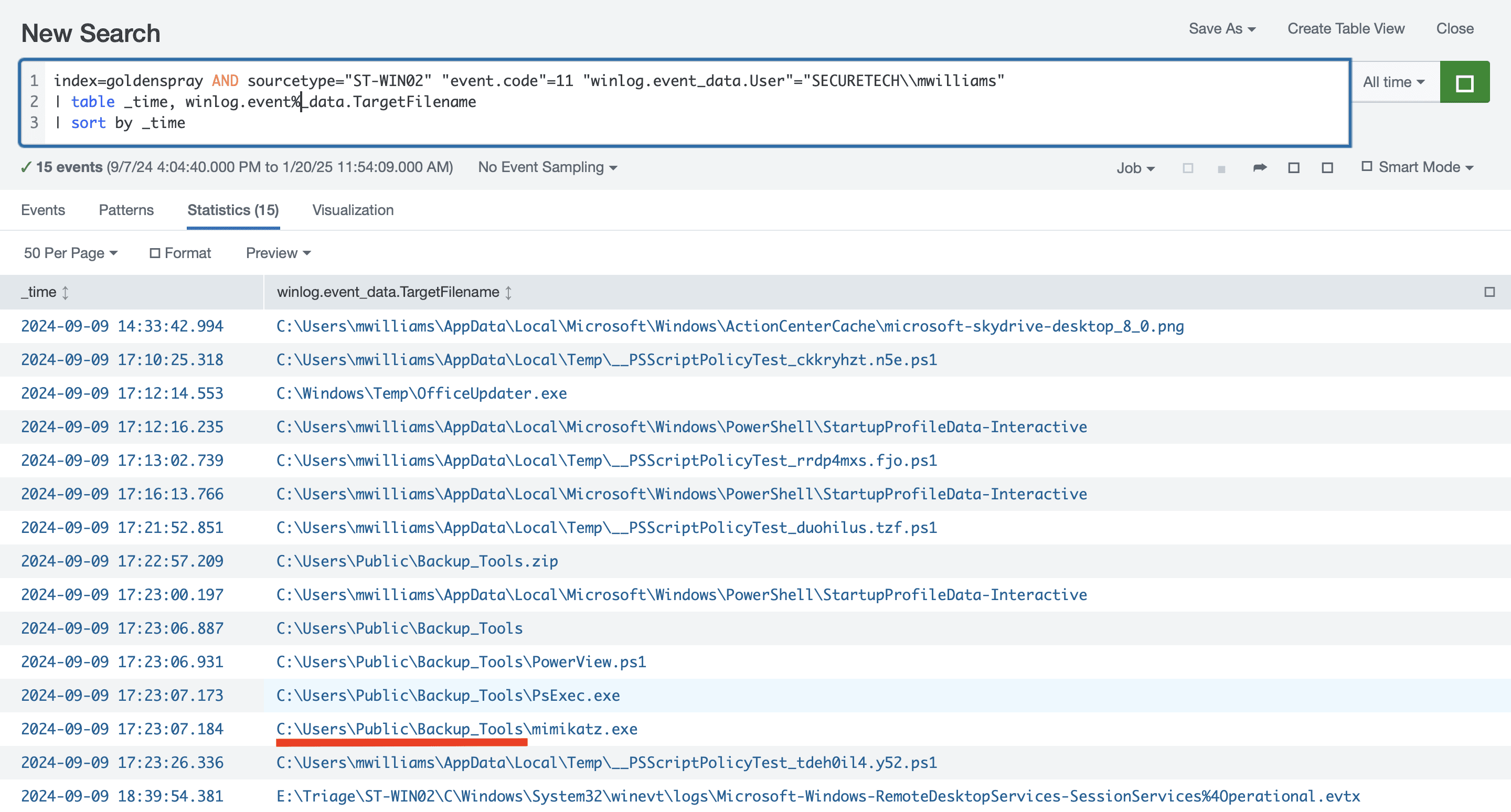
Q6 What's the process ID of the tool responsible for dumping credentials on ST-WIN02?
index=goldenspray AND sourcetype="ST-WIN02" "winlog.event_id"=1 "winlog.event_data.OriginalFileName"="mimikatz.exe"
| table by _time winlog.event_data.CommandLine, winlog.event_data.ProcessId
| sort by _time
- we can see
mimikatz.exebeing executed (event_id = 1). Mimikatz is being used in this scenario for credential dumping. In the current analysis, it has a process ID of3708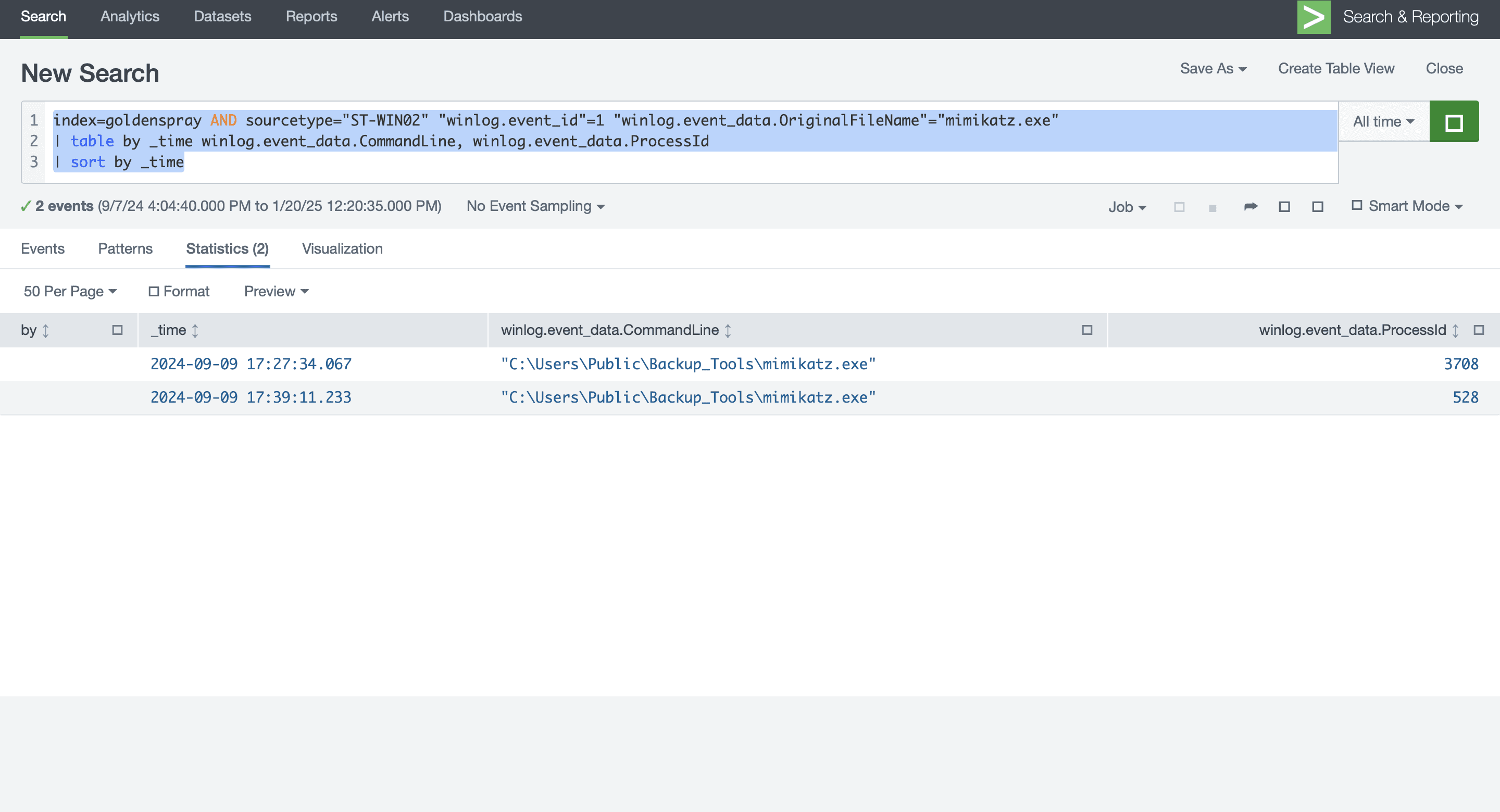
Q7 What's the second account username the attacker compromised and used for lateral movement?
- Use the query mentioned in question 3. On scrolling, the last user on the list which is
jsmith, was compromised right aftermwilliams. So, we can use the 'domain name\name' as our flag which isSECURETECH\jsmith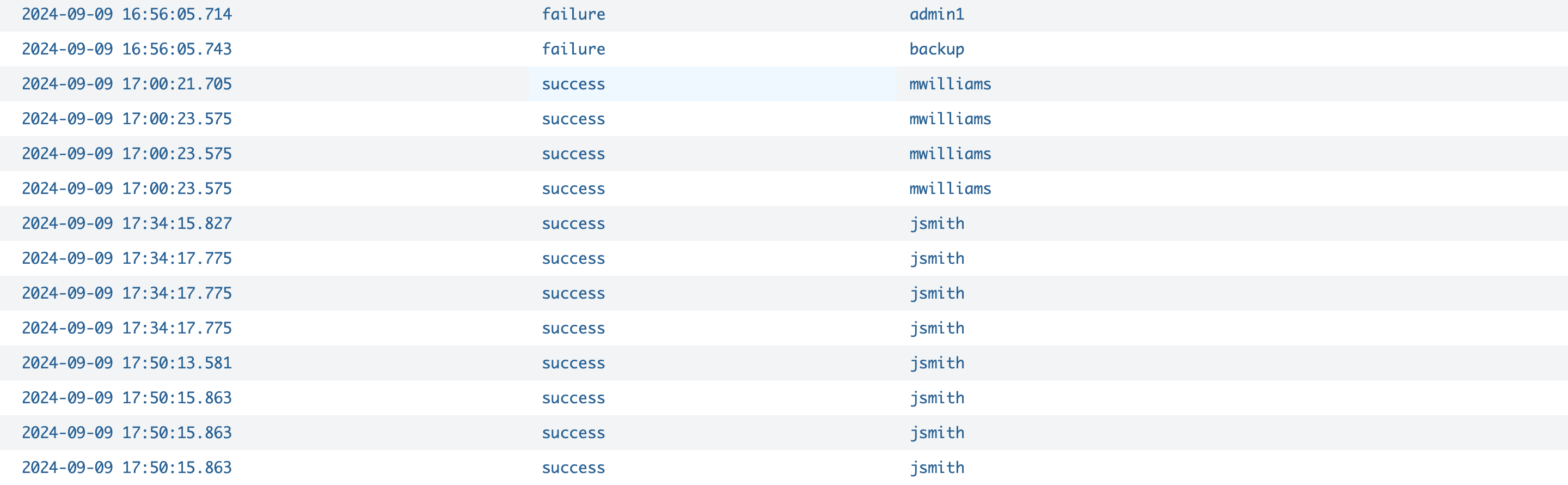
Q8 Can you provide the scheduled task created by the attacker for persistence on the domain controller?
index=goldenspray event.code=1 AND "*scheduled"
- Using this query we'll be left with a single event. Analyze the
winlogsection of this event and you'll come across an malicious executable being executed as a power shell command to run on a scheduled basis. The entire command with rulename is mentioned afterevent_data.CommandLine
For a better view check the query below
index=goldenspray event.code=1 AND "*scheduled"
| table _time, winlog.event_data.CommandLine, winlog.event_data.RuleName
- This query will create a Table which will help us clear out noise and will leave us with scheduled task name, followed by an hourly scheduled command and rulename. In this question,
FilesCheckshould be our answer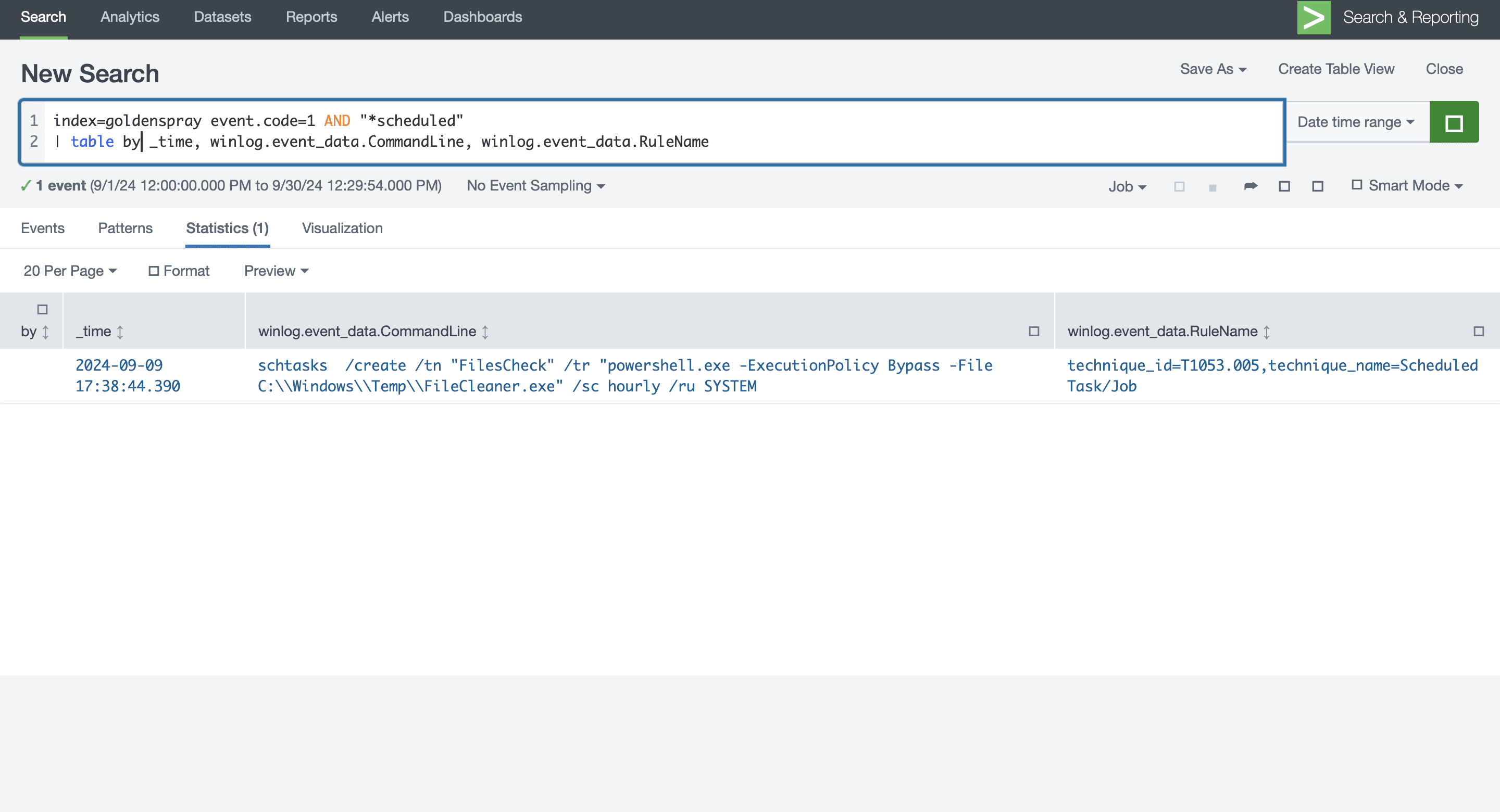
Q9 What's the encryption type used in the environment Kerberos tickets?
index=goldenspray
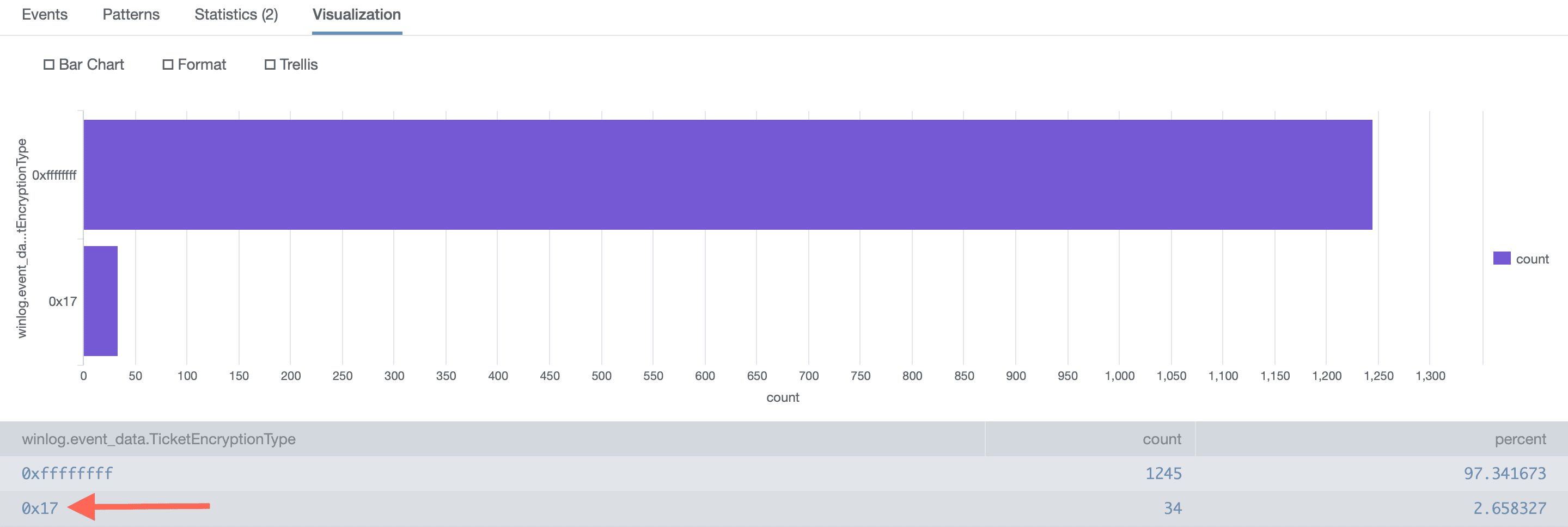
| top limit=20 "winlog.event_data.TicketEncryptionType"
You'll be left with 2 results
- 0xffffff indicates kerberos authentication failure
- 0x17 tells us the encryption type used here
- We can see in MS Kerberos table for event id 4769 that hex code
0x17indicatesRC4-HMACwhich should be our flag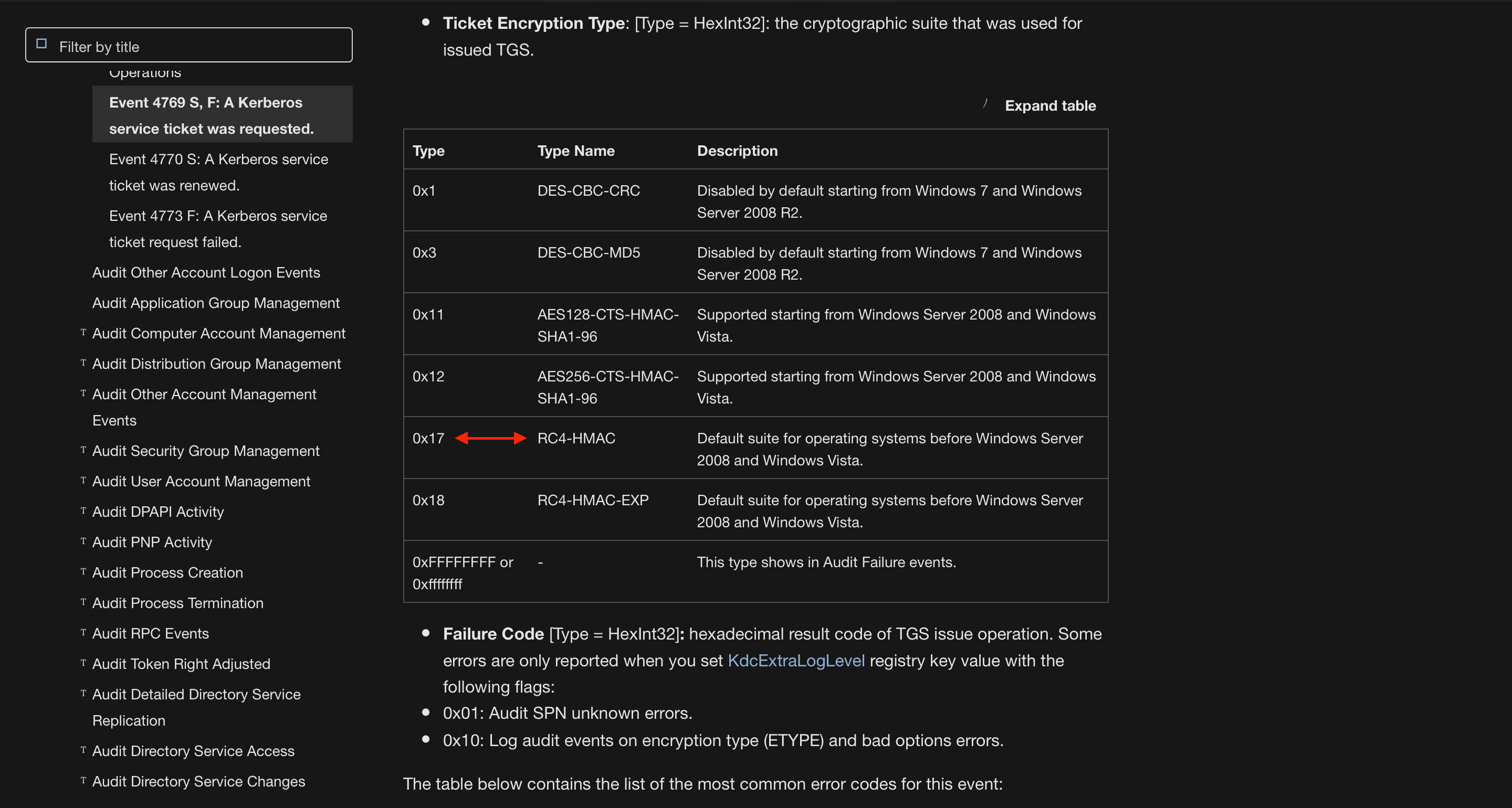
Q10 Can you provide the full path of the output file in preparation for data exfiltration?
index=goldenspray  "winlog.event_data.User"="SECURETECH\\jsmith"
| table _time, winlog.event_data.TargetFilename
| sort by _time
| reverse
- Using this query we can find the full path of the file. As per results from this query the file that was created for data exfiltration was
Archive_8673812.zipand it's exact path, which should be out flag isC:\Users\Public\Documents\Archive_8673812.zip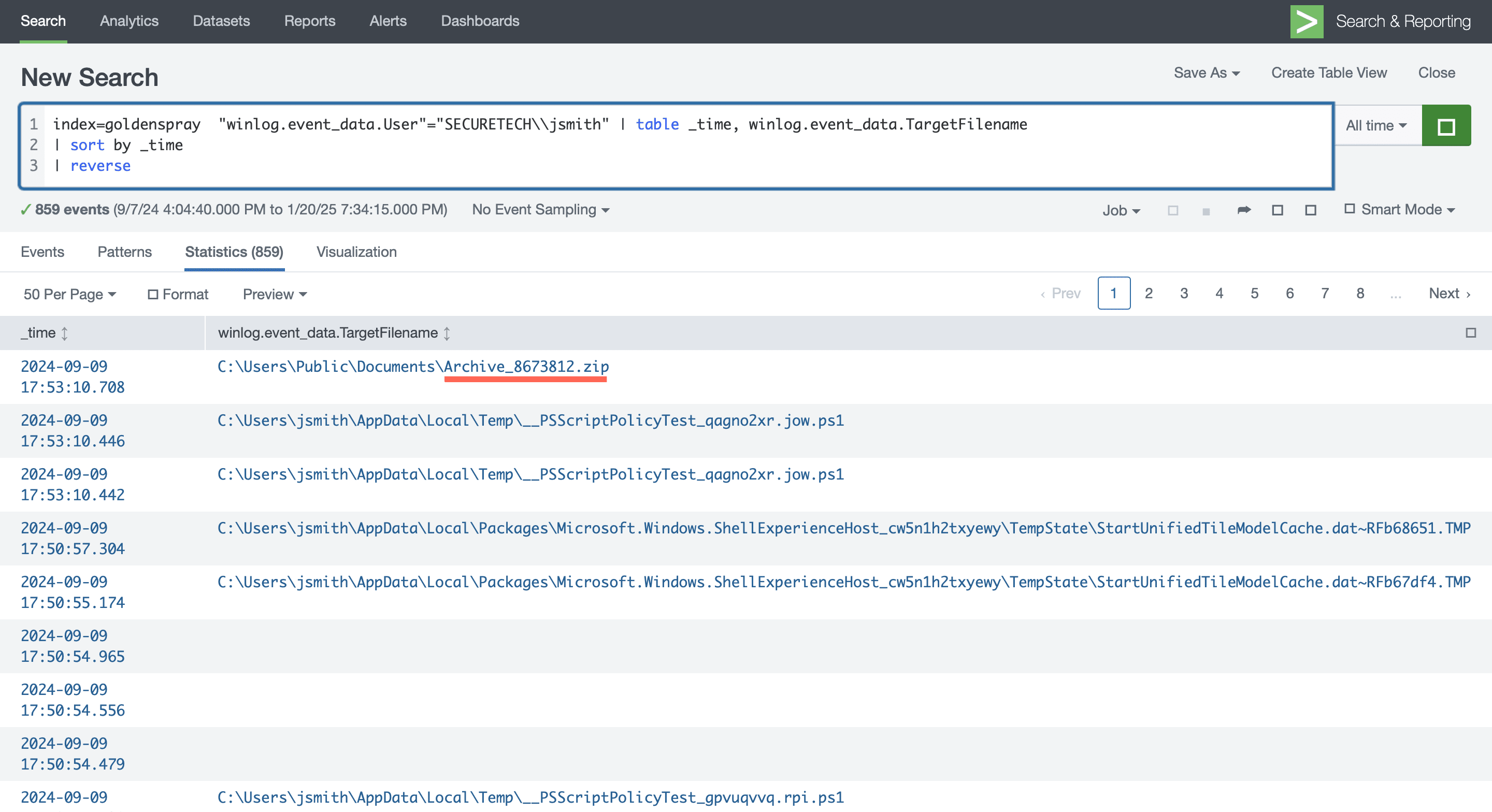
If you've made this far, thank you for reading!