- Published on
Tusk Infostealer Lab Walkthrough

- Scenario
- CTF Walkthrough
- Q1 What is the size of the malicious file?
- Q2 What word does the threat actor use in log messages to refer to victims, drawing inspiration from ancient tusk hunters?
- Q3 The threat actor created a malicious website to simulate a platform specialized for creating and managing decentralized autonomous organizations (DAOs) on the MultiversX blockchain. What is the name of the malicious website?
- Q4 Where are malware samples hosted for both macOS and Windows?
- Q5 The malicious executable contains a configuration file that includes base64-encoded URLs and a password used for archived data decompression, enabling the download of second-stage payloads. What is the password for decompression found in this configuration file?
- Q6 What is the name of the function responsible for retrieving the field archive from the configuration file?
- Q7 In the Third Sub-Campaign, The attacker simulated An AI translator, What is the name of the legitimate translator and the name of the Malicious Translator?
- Q8 What are the IP Addresses of the StealC C2 Server?
- Q9 What is the address of the Ethereum cryptocurrency wallet used in this campaign?
Tusk Infostealer is a easy beginner level Threat Intelligence Lab by CyberDefenders.Knowing how easy this lab is you probably can do it on your own once you get the right tool. I suggest you read the Introduction Part by clicking on the CTF Walkthrough heading. After that try to solve this lab on your own. You can always come back to this blog anytime.
Scenario
A blockchain development company detected unusual activity when an employee was redirected to an unfamiliar website while accessing a DAO management platform. Soon after, multiple cryptocurrency wallets linked to the organization were drained. Investigators suspect a malicious tool was used to steal credentials and exfiltrate funds.
Your task is to analyze the provided intelligence to uncover the attack methods, identify indicators of compromise, and track the threat actor’s infrastructure.
CTF Walkthrough
You can either do this lab using Kaspersky Threat Intelligence Portal or with your OSINT Skills using Google search. For this lab you'll need both, if you don't have premium access to Kaspersky Threat Intelligence Portal.
- Start by searching for this malware using Google. Search
Tusk Infostealerand you'll come across many sources. I would suggest you to read this article and then try to solve this lab using their analysis InfoStealer.com
- Also don't forget to download the lab file. After downloading, unzip and get the Hash. Once you have the hash
E5B8B2CF5B244500B22B665C87C11767use it to gather Intelligence from Kaspersky Threat Intelligence Portal
Q1 What is the size of the malicious file?
- You need to make use of the Hash provided in the lab file and use it on
Kaspersky Threat Intelligence Portalwhich is also mentioned in the recommended tools to solve this lab. We can clearly see the size of this Infostealer being exactly921.36 KB. Here's a link if you want to verify it Tusk Infostealer Kaspersky Threat Intelligence Report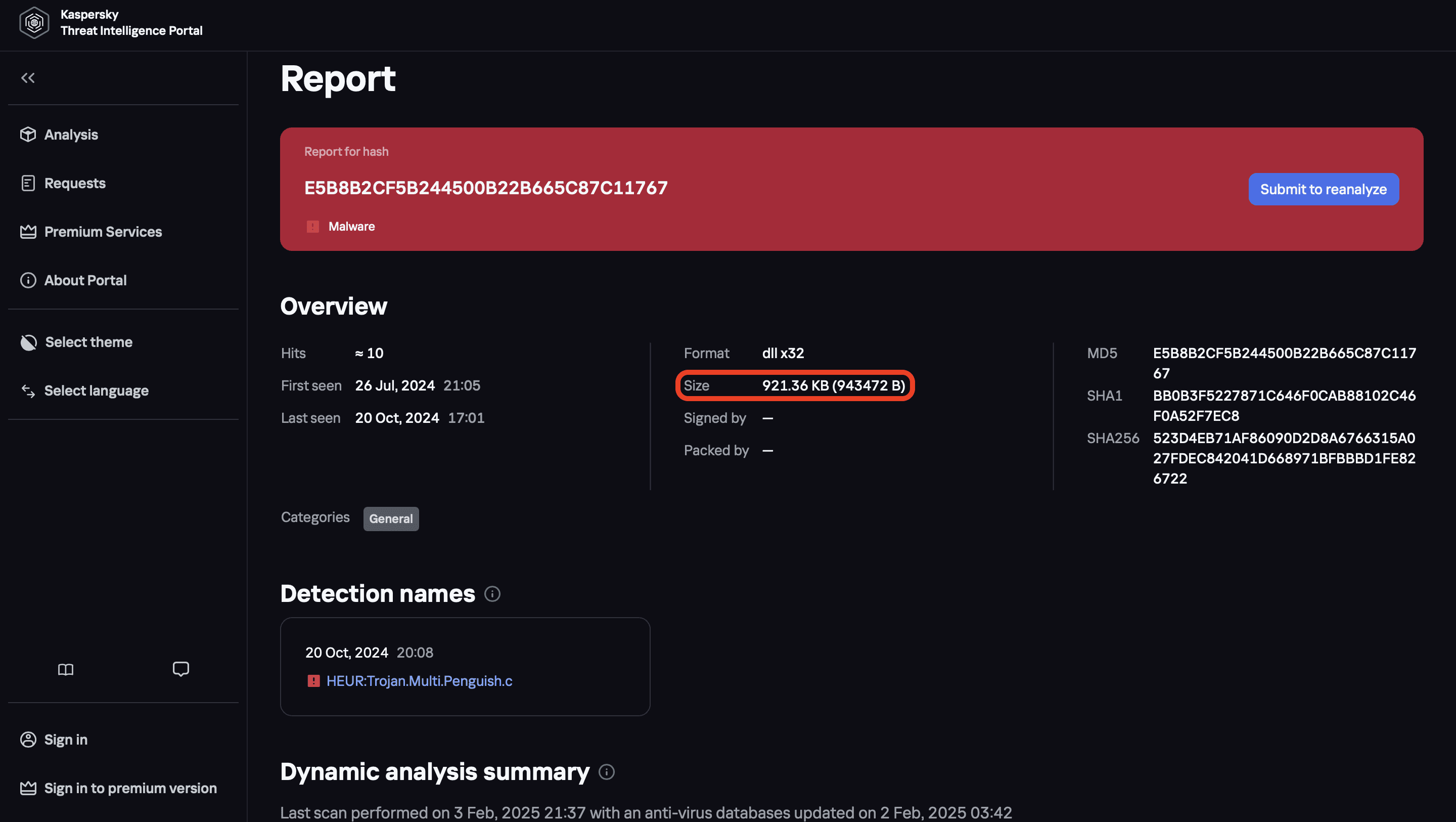
Q2 What word does the threat actor use in log messages to refer to victims, drawing inspiration from ancient tusk hunters?
- If you read the analysis from Infostealer, it's clearly mentioned that threat actor uses the word
Mammoth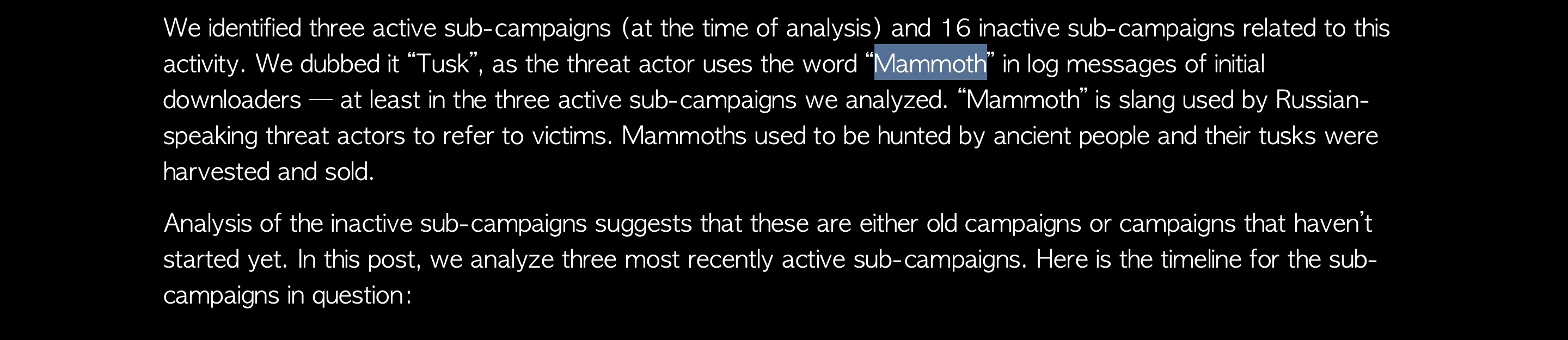
Q3 The threat actor created a malicious website to simulate a platform specialized for creating and managing decentralized autonomous organizations (DAOs) on the MultiversX blockchain. What is the name of the malicious website?
- As mentioned in the report. The malicious website is
tidyme.io
Q4 Where are malware samples hosted for both macOS and Windows?
- Report says that
This campaign has several malware samples for macOS and Windows, both hosted on Dropbox. In this post we will explore Windows samples only.For this questionDropboxshould be our flag
Q5 The malicious executable contains a configuration file that includes base64-encoded URLs and a password used for archived data decompression, enabling the download of second-stage payloads. What is the password for decompression found in this configuration file?
- Config file in
tidymesample contains a base64-encoded URL which is followed by a password for the second payload which is our flagnewfile2024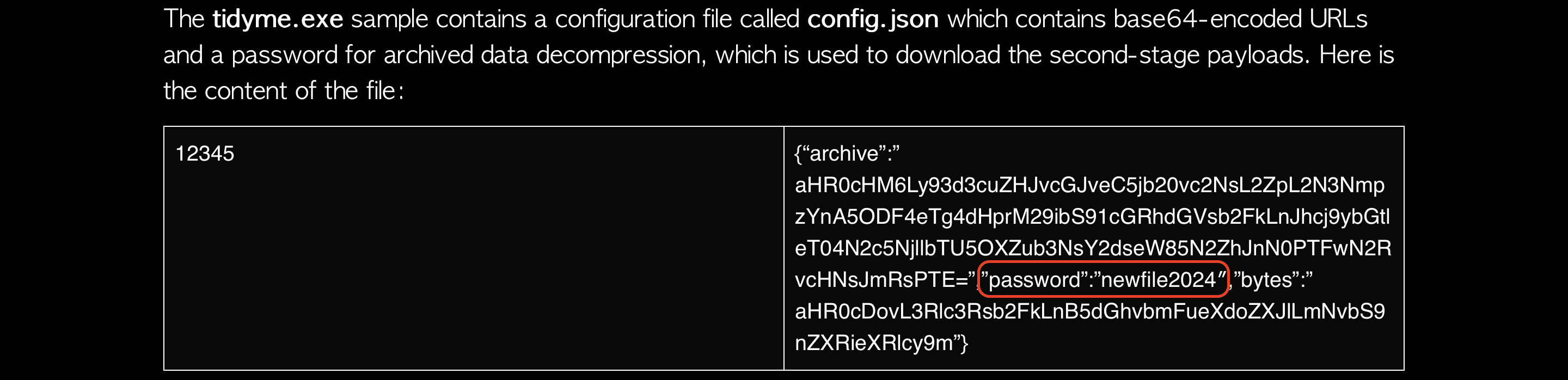
Q6 What is the name of the function responsible for retrieving the field archive from the configuration file?
- Function name here is
downloadAndExtractArchive
Q7 In the Third Sub-Campaign, The attacker simulated An AI translator, What is the name of the legitimate translator and the name of the Malicious Translator?
- Here we can see
Yous, voicoboth side by side. One was created by the attacker to lure victim into thinking it's a legitimate site. For initial compromise attackers try to find out the websites their victim visits often enough and then they try to replicate it as much as possible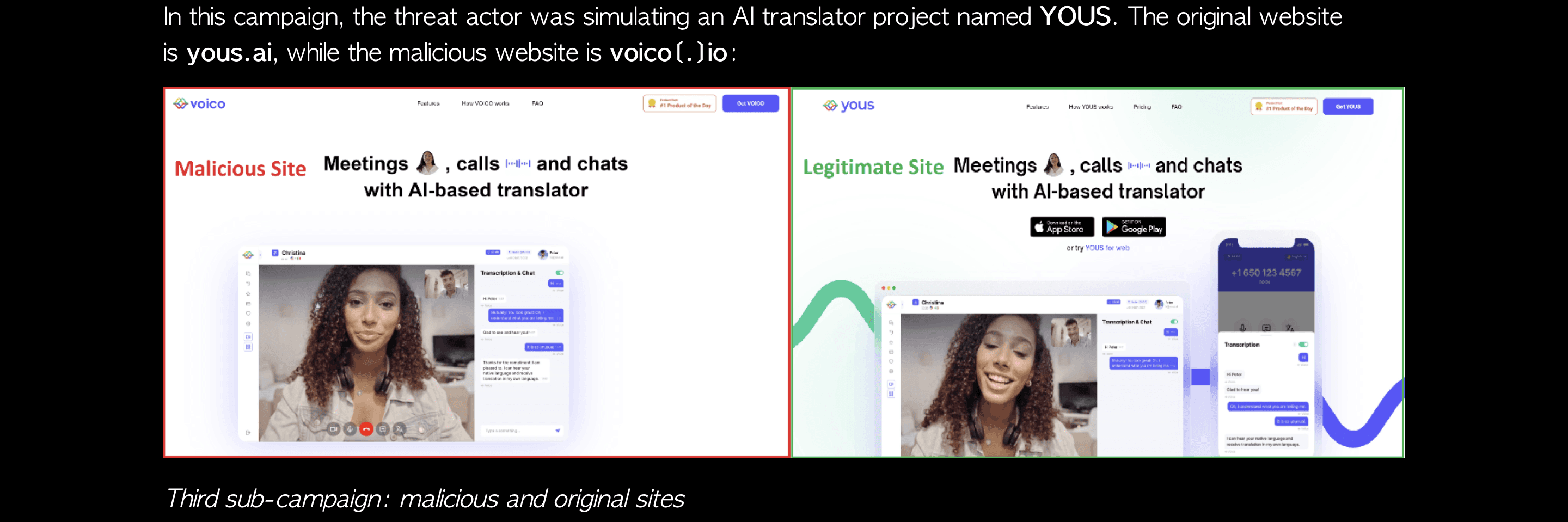
Q8 What are the IP Addresses of the StealC C2 Server?
- Need no explanation as both of the IP address used by StealC2 are clearly visible
46.8.238.240,23.94.225.177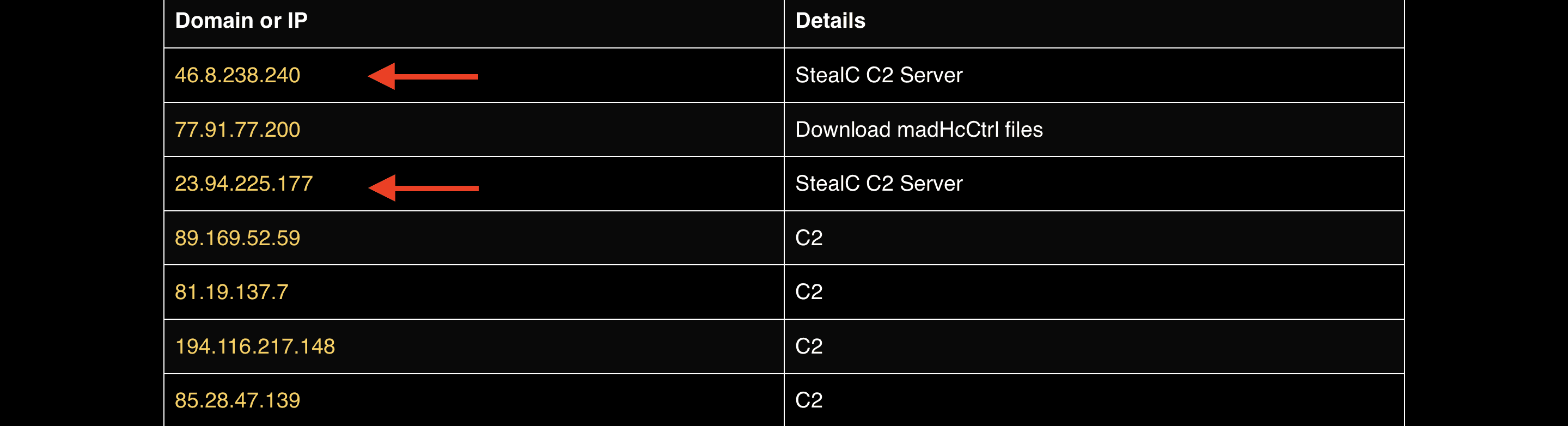
Q9 What is the address of the Ethereum cryptocurrency wallet used in this campaign?
BTCis used by Bitcoin andETHis used by Ethereum so our flag should be0xaf0362e215Ff4e004F30e785e822F7E20b99723A
If you've made this far, thank you for reading!